Is Washi the Same as Origami Paper? Washi’s Strength Shows at the Joints
Origami paper is named for a use; washi is a kind of paper, with its own materials and methods. Here is where that difference shows, and which folds need it.
This column was written by AI from the sources listed below. Sakinome decides what is published.
Short answer
Not necessarily. Origami paper is named for its use. Kami, paper made for origami, comes in standard sizes such as 6-inch (about 15 cm) squares and is usually printed on one side only. Washi is a kind of paper: the general name for paper developed in Japan from its own materials and methods.
The two overlap. Chiyogami, washi printed in colored patterns, is one of the common origami papers. Washi is strong even when thin, but some washi does not hold a sharp crease.
The origami paper sold most widely is called . It comes in squares, often 6 inches (about 15 cm) or 75 mm (about 3 in) on a side, many printed on one side only.
Is that washi? Not necessarily. Origami paper is named for what you do with it. Washi is a kind of paper, made from materials and by methods developed in Japan.
The two can overlap. Washi printed in colored patterns, called , is one of the common origami papers, next to plain colored squares.
One place the difference shows is a fold that leaves the paper only a few millimeters wide.
What is washi paper made of?
Washi is usually made from the fibers of three shrubs. Kozo, the paper mulberry, grows to about 3 m (10 ft) and can be harvested every year. Papermakers use the fiber from its inner bark.
can be harvested every three years. grows so slowly that it is hard to farm, so it is gathered from the wild.
The three differ in fiber length:
- Kozo: usually 6–15 mm (about 0.24–0.59 in), and 15 mm (0.59 in) on average in one Gifu study. Thick, long and tough, it is the most used, across a wide range of papers, from paper for shoji sliding doors to the paper that backs hanging scrolls.
- Mitsumata: about 3 mm (0.12 in) on average. The fiber is soft, fine and glossy, and it is also used in Japan’s banknotes.
- Gampi: also about 3 mm (0.12 in) on average. It makes a glossy, translucent paper that insects tend to leave alone.
Long fibers alone do not make a good sheet. The papermaker adds , a sticky liquid usually made from the root of the tororo-aoi plant. It keeps the fibers from clumping, so they spread evenly through the water.
In , the Japanese method, that water is scooped onto a screen and rocked back and forth; in Mino, side to side as well. The rocking tangles the long kozo fibers in every direction, and the sheet becomes harder to tear.
In Japan, washi goes into shoji screens, calligraphy and painting paper, bookbinding, woodblock prints, and the repair of cultural properties.
Washi is not rice paper, and it is not made from rice. The Getty Research Institute notes that pith paper, sliced from the pith of the rice-paper plant, is often wrongly called rice paper, though it has nothing to do with rice either.
What is special about washi paper at a narrow joint?
Washi is often called strong. One place to see where that strength matters is Kuwana, a city in Mie Prefecture with its own way of folding paper cranes.
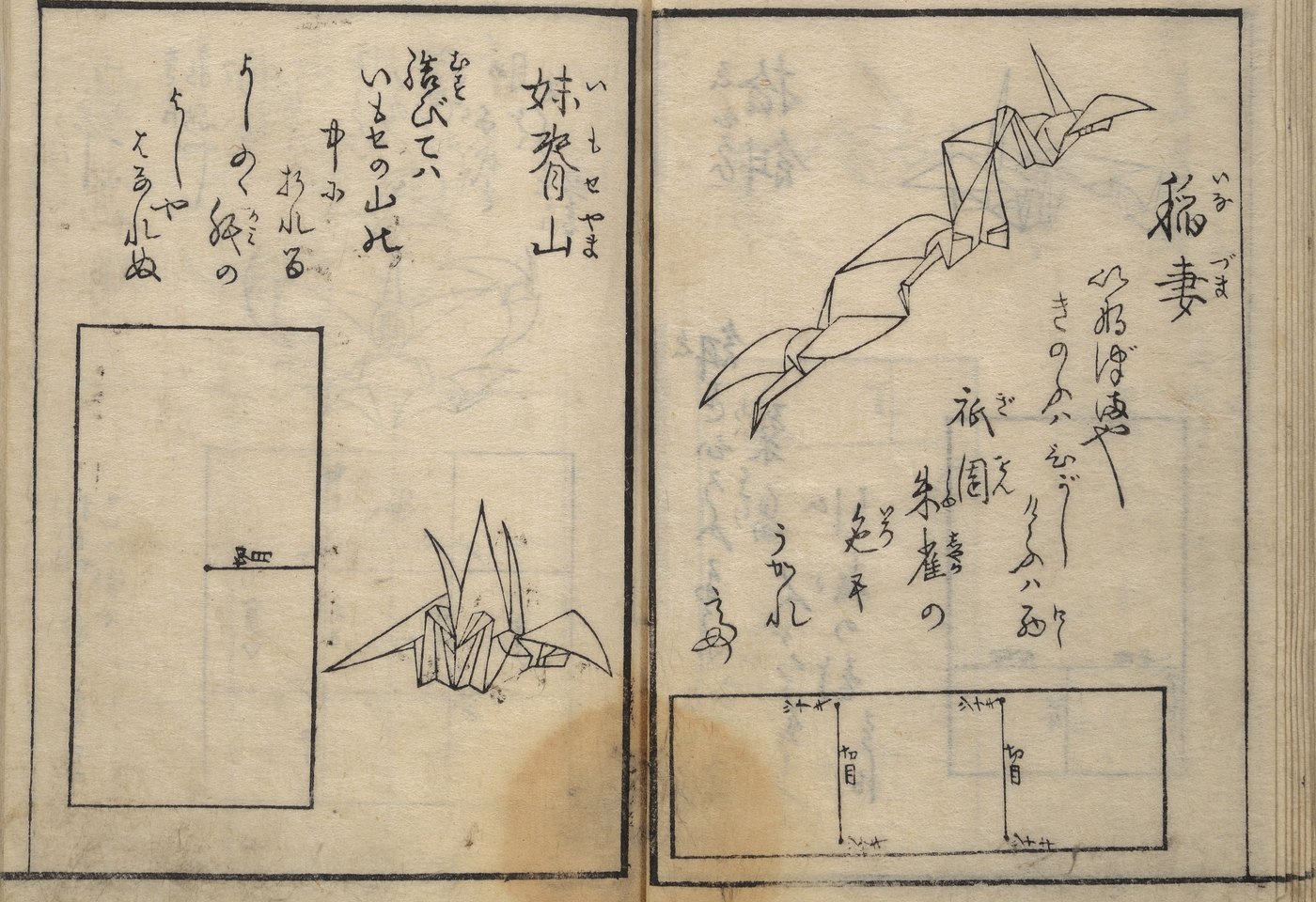
The usual thousand cranes are single cranes, or a thousand of them strung together. Kuwana’s version is renzuru: one sheet with cuts in it, and anywhere from 2 to 97 cranes still joined to each other.
The designs come from a book printed in 1797 with 49 of them. The city says their creator, a temple priest in Kuwana, spent 18 years working them out. The folding is now a city intangible cultural property.
The cuts stop a few millimeters short, so each crane stays attached to the next by a narrow bridge of paper. Waraku web describes one way to fold them: the big crane at the center first, then the cranes joined to it, one at a time, working outward. Along the way the paper is twisted and cranes are pushed through holes, which takes real force.
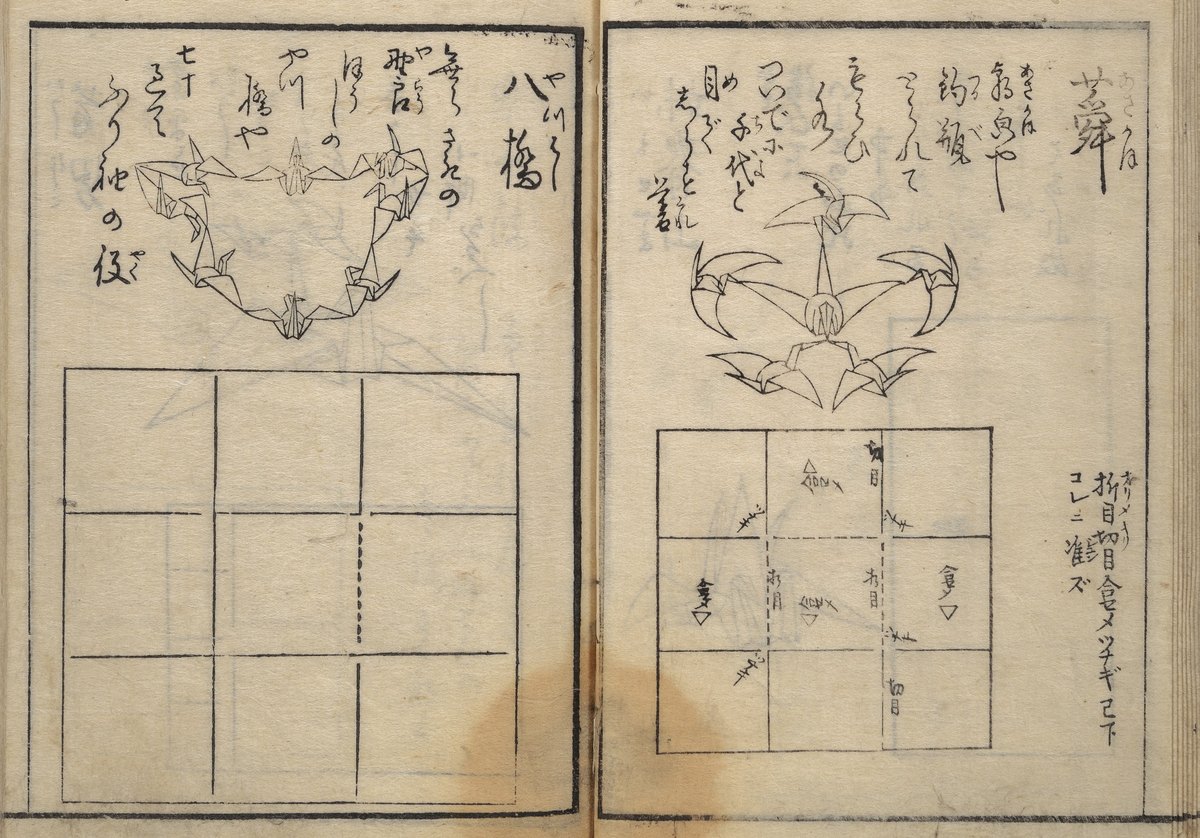
Kuwana City lists the points that need care. First, you must be able to fold a single crane completely. Second, you must use washi made from kozo, mitsumata or gampi.
Its other tip is to leave as little uncut paper as possible, for a neater finish. It also states a principle: fold the cranes in the hand, not on a table.
The city’s reason for washi is the fiber. Because washi fibers are tangled together, the paper does not tear when a little force is used, and some designs only come together with a good deal of it. So the city says to choose a high grade of washi.
Repair work uses washi at its thinnest in a similar way. To mend a badly damaged document, the damaged area is often sandwiched front and back between thin sheets of washi.
Thinner is better there, but the paper must not tear. That is why , a very thin washi, was made thinner and thinner while staying strong.
A Fukuoka library repair guide gives the reasons washi is used: it lasts, it is strong and easy to handle, and its long fibers blend in when glued. Surrey’s archive in England adds that kozo, the longest of the three fibers, makes the strongest sheet even when thin.
A joint a few millimeters wide between two cranes and a thin patch on an old page ask the same thing of paper: stay whole where there is very little of it.
Strength is not the same as holding a crease. None of the papers below was folded for this column; the reports come from tests by OrigamiUSA, an American origami organization, and, in one case, Wikipedia.
Honest notesWhere washi can be hard to fold
- OrigamiUSA tested , a kozo paper with visible fiber strands. Untreated, it kept a crease, but far less well than ordinary origami paper. Source: OrigamiUSA
- In a version backed with foil, a straight fold across a clump of fiber bent at the clump’s edge instead. The shorter the fold, the bigger the problem. Source: OrigamiUSA
- A rat folded from untreated unryu-shi could be finished, but it was nearly impossible to shape and tended to open up by itself, especially the legs. Source: OrigamiUSA
- Some washi has fibers so long and thick that it will not take a sharp crease, Wikipedia says. Source: Wikipedia, “Origami paper”
The same review also tried to measure how hard the paper could be pulled before it tore. The testing machine could not tear it, so there is no number.
Printed on one side, or colored all the way through
Kami has a second trait that has nothing to do with strength. It is usually printed on one side, so white shows wherever a fold turns the paper over.
OrigamiUSA also reviewed one brand of kami and found white showing at the corners. When a red sheet was creased with a bone folder, the color came off along the fold, leaving a white line.
Here too the reviewer folded a rat, a model that shows the white side, and found the white very distracting.
Washi can be colored in the fiber instead. Tengujo is too thin to color after it is made, so it is dyed at the fiber stage to match the object it will mend. One Mino paper company says its washi origami paper is not printed, so both sides are the same color.
That matters in a model where the back of the paper shows.
One name, two papers: handmade and machine-made washi
Washi is a general name for paper developed across Japan. A Gifu library guide splits it into two groups: traditional handmade washi and washi made by machine.
Kochi Prefecture uses the name Tosa washi both ways. In the narrow sense it means only the handmade paper designated a traditional craft. In everyday use, the machine-made paper counts too.
Mino, in Gifu, makes paper both by hand and by machine. Its handmade follows strict rules: kozo only from Daigo in Ibaraki, no chemical bleach or dyes, tororo-aoi for the neri, and a rocked bamboo screen.
In 2014, Hon-minoshi and two other handmade papers, Sekishu-banshi and Hosokawa-shi, were inscribed on UNESCO’s intangible heritage list as one entry. The listing covered papers made from kozo alone. In 2025, Echizen torinoko-shi, a gampi paper from Fukui, was added to the same entry.
Then there is machine-made washi. Japan’s paper industry association says much washi today is made by machine from chemical wood pulp. A Japanese crafts site adds that some washi uses wood pulp, bamboo or even pineapple.
The Fukuoka repair guide also warns that some kozo paper sold for repairs contains pulp, and advises looking for 100% kozo.
The two kinds behave differently; neither is the better one. The same crafts site says machine-made paper, wound onto rolls, has fibers leaning along the direction of flow. It is strong lengthwise and weaker across. The Agency for Cultural Affairs says the side-to-side rocking of Hon-minoshi spreads its fibers evenly.
Conservators now also use large, high-purity machine-made washi, according to the American Institute for Conservation.
So the word washi on a pack names the family, not the fiber. When a pack also names its fiber (kozo, mitsumata, gampi or pulp) and says handmade or machine-made, those words say more.
Picks: washi origami paper
Two packs of 15 cm (5.9 in) origami squares from Furukawa Shiko, a Japanese paper maker: box A holds 24 sheets of Mino washi in six designs, and Yuiyui pairs a circle pattern with matching colored washi.
- Furukawa Shiko Mino Washi Origami Paper in a Box (A)Patterned Mino washi origami in a box with English on it.Paper & planners, Made in Japan
- Furukawa Shiko Yuiyui Mino Washi Origami Paper, Maru KomonCircle-pattern origami with matching colored washi.Paper & planners, No folding guide listed, 15 cm sheets, Mino washi
What is origami called in Japan?
Origami. The Nihon Daihyakka Zensho (Nipponica) encyclopedia defines it as a technique and a game of folding paper into shapes.
Older words exist too. A Kyushu University Library guide says that until the late 1800s, such folds were called or . Kuwana’s 1797 book has orikata in its title, and the city reads the word as origami.
The same guide separates ceremonial folding, shaped by ritual and etiquette, from recreational folding as papercraft. It says most origami today is the recreational kind.
The word origami had another job as well: a sheet folded in half, used as a certificate for paintings and antiques. The Japanese phrase origami-tsuki, for something certified, is said to come from it.
The name washi was given to Japan’s traditional paper to set it apart from imported paper, which was called .
Before you choose a sheet: a test fold in kami and washi
Take the model you plan to fold next and look for three spots: a joint only a few millimeters wide, a twist or pull-through, and a place where the back of the paper shows. If it has any of them, fold just that part once in kami and once in washi, and compare whether the joint holds and which color shows.
Picks for this column
Washi in other shapes: a Midori letter set whose A5 sheets and envelopes are Echizen washi, a Furukawa Shiko book cover in a Mino washi the maker calls lace-like, and a bag of 20 small washi stickers.
- Midori Letter Set, Floral-colored Washi Paper, WhiteA5 washi letter paper, matching envelopes and a case.Paper & planners, Made in Japan
- Mino Washi Bunko Book Cover, I Am a CatBlack-cat book cover in lace-like Mino washi, for bunkoEverything else, Bunko size, no book included, Made in Japan
- Furukawa Shiko Washi Flake Stickers, NipponMount Fuji and Shiba washi stickers to seal letters.Paper & planners, Made in Japan
Keep reading
Show sources (30)
- Gifu Prefectural Library, guide to Gifu washi: washi as a general name, handmade and machine-made. (in Japanese)
- Musashino Art University, explainer on washi: its own materials and methods, neri and nagashi-zuki, the name washi. (in Japanese)
- Kochi Prefecture, Tosa washi strategy: the two meanings of Tosa washi; kozo, mitsumata and gampi, their fibers and uses. (in Japanese)
- Japanese Culture (japanese-culture.info), origami: colored squares and chiyogami as common origami papers.
- Wikipedia, “Origami paper”: kami, its usual sizes and one-sided printing; some washi that will not take a sharp crease.
- OrigamiUSA, paper review of one brand of kami: white at the corners and creases, the folded rat.
- OrigamiUSA, paper review of unryu-shi: crease memory, folding across fiber clumps, the folded rat, the tensile test.
- UNESCO, intangible heritage listing “Washi” (traditional Japanese hand-made paper): paper mulberry; the 2025 inscription.
- University of Melbourne, Asian papermaking fibers, mitsumata: average fiber length.
- University of Melbourne, Asian papermaking fibers, gampi: average fiber length.
- Gifu Prefectural Industrial Technology Center, research report (2021): the usual range of kozo fiber length. (in Japanese)
- Gifu Prefectural Industrial Technology Center, research report (2015): the average length of kozo fiber. (in Japanese)
- Ministry of Land, Infrastructure, Transport and Tourism, multilingual explanation of Hon-minoshi: inner-bark kozo from Daigo, neri. (in Japanese)
- Ministry of Land, Infrastructure, Transport and Tourism, how Hon-minoshi is made: rocking that tangles the fibers. (in Japanese)
- Ministry of Land, Infrastructure, Transport and Tourism, Hon-minoshi and Mino: the rules for Hon-minoshi; handmade and machine-made paper in Mino. (in Japanese)
- Tokyo National Research Institute for Cultural Properties: the usual source of neri. (in Japanese)
- Getty Research Institute, Art and Architecture Thesaurus, “pith paper”: often wrongly called rice paper.
- Agency for Cultural Affairs, Cultural Heritage Online, Washi: the 2014 listing, kozo only, the side-to-side rocking, today’s uses. (in Japanese)
- Echizen City, press release: Echizen torinoko-shi added to the UNESCO listing in 2025. (in Japanese)
- Kuwana City, “Kuwana no Senbazuru”: linked cranes from one sheet, the 1797 book, the points that need care, washi and force. (in Japanese)
- Waraku web (Shogakukan), Kuwana’s linked cranes: cuts left a few millimeters short, folding from the center out, twisting and threading. (in Japanese)
- Waraku web (Shogakukan), tengujo: mending documents between thin washi, dyeing at the fiber stage. (in Japanese)
- Fukuoka Prefectural Library, repair guide: why washi is used, and choosing 100% kozo. (in Japanese)
- Surrey County Council, Japanese paper in conservation: kozo as the longest and strongest of the three fibers.
- Furukawa Shiko, page on its Mino washi origami: not printed, the same color on both sides. (in Japanese)
- Japan Paper Association, glossary: washi materials, and washi made by machine from chemical pulp. (in Japanese)
- GLTJP (Japanese crafts site), washi: other materials, and fiber direction in machine-made paper. (in Japanese)
- American Institute for Conservation, Asian papers: machine-made washi in conservation.
- Kotobank, “Origami” (Nihon Daihyakka Zensho, Nipponica): the definition, and origami as a certificate. (in Japanese)
- Kyushu University Library, origami guide: orisue and orikata, ceremonial and recreational origami.