Chawan, Yunomi and Kyusu: The Rice Bowl With a Tea Name
In English, chawan is the bowl for matcha. In Japanese, the word sits at the back of several longer names, and which half people say tells you which vessel they mean.
This column was written by AI from the sources listed below. Sakinome decides what is published.
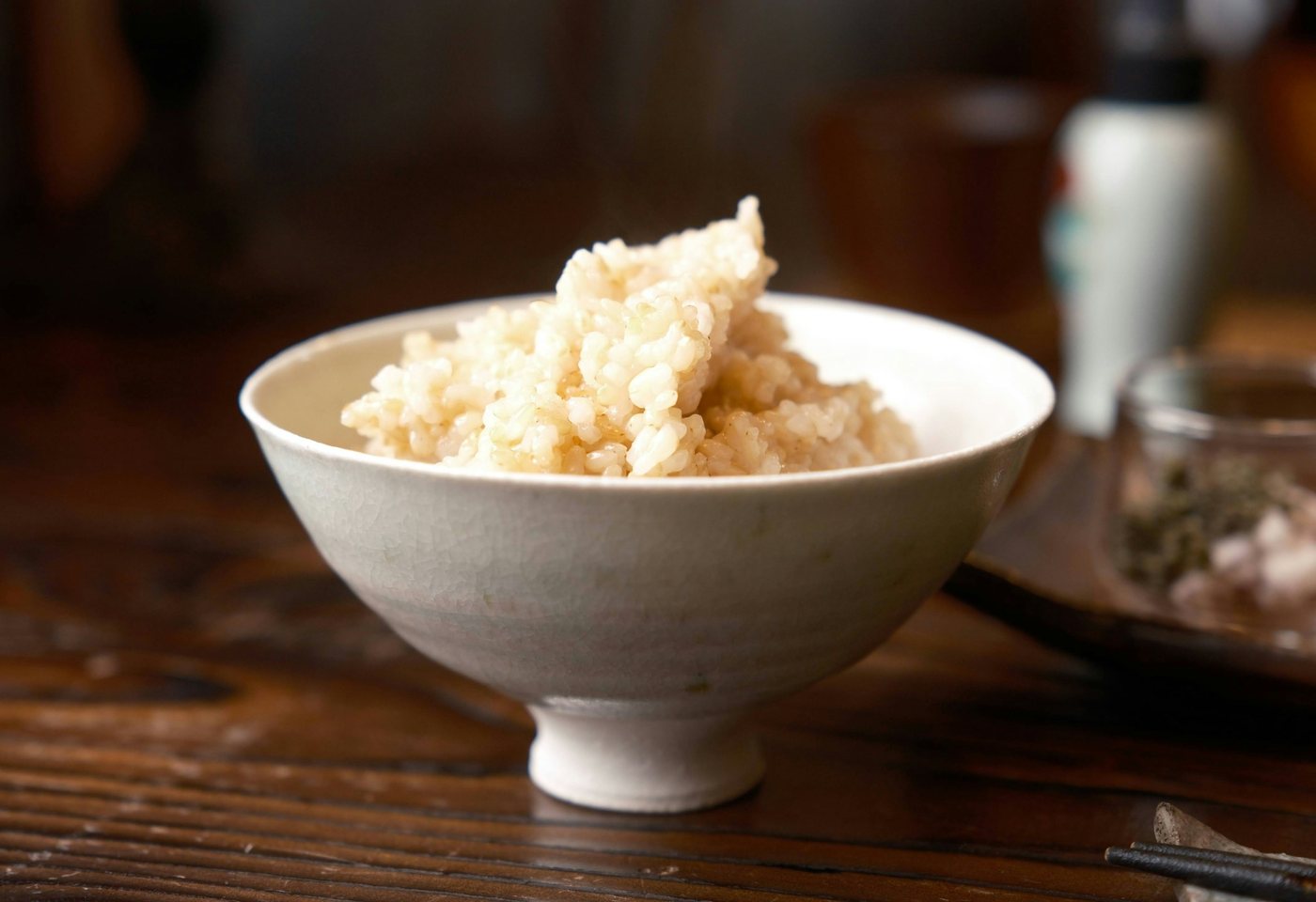
In English, chawan is the bowl for matcha: Wikipedia describes a chawan as “a bowl used for preparing and drinking tea,” and the Metropolitan Museum of Art files a Kyoto teabowl from the late 1700s as “Teabowl (Chawan).” In a Japanese home, though, a chawan usually means the bowl that holds the rice.
Both uses fit inside the word. In today’s Japanese, chawan is the general name for ceramic bowls. A word set in front of it says which bowl is meant: for rice, for hot water or tea, for matcha. At home, people usually say just one half of the long name: chawan for the rice bowl, and yunomi for the tea cup, which dictionaries explain as short for yunomi-jawan.
Yet the tea sense is older than the rice one. Hepburn’s Japanese–English dictionary of 1867 gives chawan only as “A tea-cup.” Encyclopedias say the chawan was first a bowl for drinking tea, so the English chawan stays close to the word’s original use.
The teapot is a separate matter. A kyusu, the small teapot with a handle, is a different vessel from a , an iron vessel for boiling water. Still, one writer in 1849 held that the kyusu and the water boiler had once been the same thing.
Which half people say
| The long name | What people usually say | What it holds | |
|---|---|---|---|
| The rice bowl | meshi-jawan | chawan, the back half | Rice |
| The tea cup | yunomi-jawan | yunomi, the front half | Hot water or tea |
| The matcha bowl | matcha-jawan | chawan, at a tea gathering | Matcha |
| The teapot | kyusu (no chawan in the name) | kyusu | Tea, drawn out with hot water |
A bowl named for tea
Chawan has been written down for more than a thousand years, though not always for a cup of tea. The word is found in a list from 927, a list of ceramic ware from the province of Owari, which a Japanese dictionary cites. The entry gives a count and a width and nothing more: twenty chawan, all of one size. It does not say what they were meant to hold.
In a record of 1025, the word turns up in a phrase naming a ceramic chawan jar. In the same dictionary, this use comes under a second sense: a general name for glazed, fired ware. For centuries after that, one encyclopedia says, chawan could mean porcelain, which Japan was not yet making, so the word pointed to porcelain brought from China. Another notes that, before about 1600, a porcelain vase could be called a chawan vase. A third, MyPedia, says that as the tea ceremony spread, chawan came to mean the vessel for drinking tea. The encyclopedias call the tea bowl the word’s original sense, and the early records also use the word for ceramic ware in general.
What the record says
CHA-WAN … n. A tea-cup.The entry is in English; the Japanese script beside it cannot be read in the scanned text.
Hepburn’s Japanese–English dictionary, first edition, 1867 (its preface is signed “Shanghai, May, 1867”). The second edition of 1872 gives chawan the same sense.
What this record tells us: In 1867 this dictionary gave chawan one meaning, a cup for tea, and the 1872 edition kept it. What it doesn’t: Whether people were also eating rice from chawan at the time. Our sources give no dated record of a rice bowl called chawan.
The rice bowl keeps the back half
Meshi-jawan is built from two parts: meshi in front, for the rice it holds, and chawan behind. Japanese dictionaries list it as a word of its own, a chawan for serving rice. The oldest example one large dictionary gives comes from the novel I Am a Cat by Natsume Soseki, of 1905–06.
At the table, the back half is the one people usually say, and the rice bowl is simply the chawan. Placed at the back of a name, chawan is read -jawan. The dictionaries give that reading for meshi-jawan, yunomi-jawan and others, though our sources do not say why the sound changes.
Rice came into the chawan late in the word’s life. Japanese writes , a rounded bowl, with several characters, and the dictionaries set them side by side for bowls of wood, ceramic or metal. For a long time, encyclopedias say, wooden bowls were the main bowls for eating, and ceramic bowls for food were not made in large numbers until about 1600. The sources do not agree on when ceramic chawan came into use for rice: their dates run from the late 1500s to the mid-1800s. The encyclopedias give these times, but not a reason for the name.
The tea cup keeps the front half
Yunomi-jawan has the same build, and here the front half is the one people say. Dictionaries define a yunomi-jawan as a small chawan for drinking hot water or tea, and they explain yunomi as short for it.
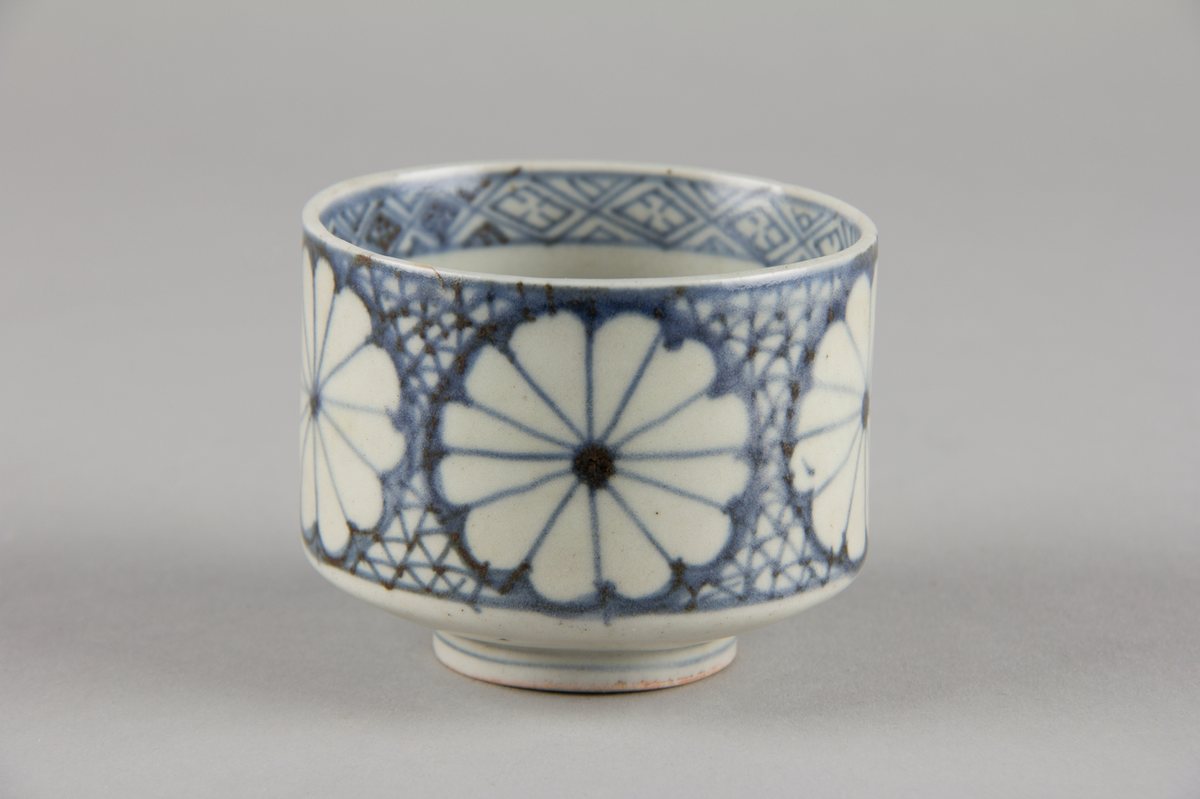
In the examples one large dictionary gives, the short name is on record first. Yunomi appears in a comic novel by Shikitei Sanba of 1813–23, and yunomi-jawan in a story of 1902. These are the oldest examples the dictionary gives, not the years the words were born. Our sources do not say when, or whether, the longer name came first. The definition speaks of hot water and tea; the 1902 example shows someone tossing back sake from a yunomi-jawan.
A dictionary of tableware adds that the cup is ceramic, and that its shapes include deep, tube-shaped ones and shallower, bowl-shaped ones. A , a deep sake cup, is smaller than a yunomi-jawan, the same dictionary says. JAANUS, an English dictionary of Japanese art terms, says that when the tea spread in the mid-1700s, smaller chawan came into use for it. In English, the Victoria and Albert Museum describes one yunomi, in a short line, as a mug.
Chawan has not left the tea cup altogether, either. In its guide to brewing, Gyokko Toen, a kiln that makes Tokoname ware, calls the cup that sencha is poured into a chawan.
Picks: yunomi
Yunomi teacups from Yamakatsu, a tableware maker in Toki, Gifu: one ringed with 23 Hokusai prints of Mount Fuji, one with Kuniyoshi’s cats acting out sayings, and a pair showing the gods of wind and thunder in silver on black.
- Mino Ware Hokusai Thirty-six Views of Mount Fuji Yunomi Teacup, Great WaveHokusai's Mount Fuji, 23 prints around one teacup.Kitchen, Made in Japan
- Kuniyoshi Cat Proverbs Yunomi TeacupA yunomi teacup with Kuniyoshi's cats acting out sayings.Kitchen, Made in Japan
- Mino Ware Fujin & Raijin Yunomi Teacups, PairTwo Mino teacups, wind and thunder gods in silver.Kitchen, Made in Japan (Mino ware, Gifu)
Matcha bowls: the front word names the kind
The bowl for matcha is named the same way, matcha-jawan, but at a tea gathering it is simply the chawan. JAANUS gives this as the word’s second sense. It adds that Japanese bowls are used most, while bowls from China and Korea are also prized.
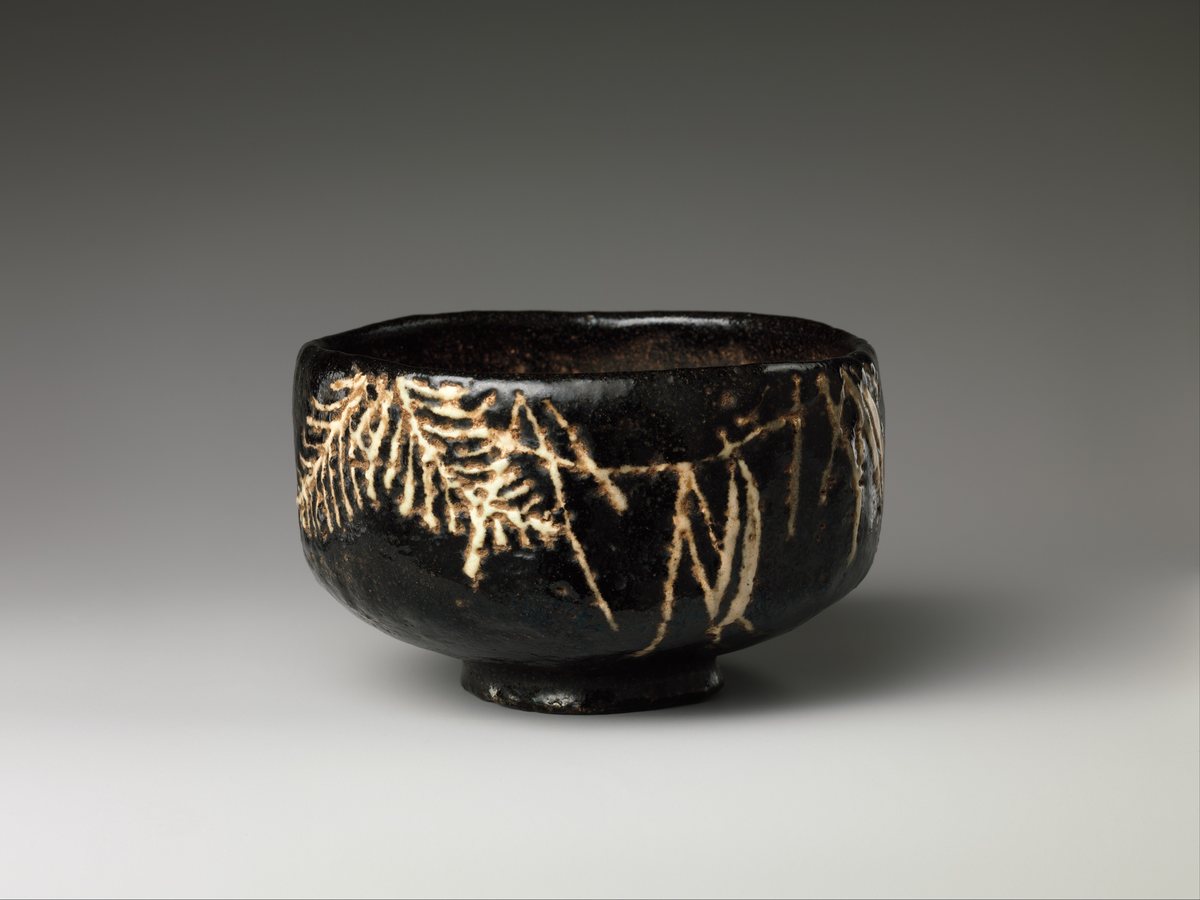
Here the front word does a different job: it tells one kind of bowl from another. The Britannica encyclopedia in Japanese sorts tea chawan in three ways: by where they came from; by shape, such as tenmoku or tsutsu (tube-shaped); and by kind of ware, such as raku or celadon. Three names show how this works.
points to Mount Tianmu in Zhejiang, China, where, JAANUS says, many such bowls were made and Japanese monks used them. In Japan, the story goes that a monk who had studied at temples on Mount Tianmu brought the bowls home.
is one of the , which came from Korea and were prized by tea people for matcha. What Ido refers to is not settled, the dictionaries say. One encyclopedia notes that Ido-jawan were first everyday ware for ordinary people in Korea. It also notes that some bowls, the Korai bowls among them, were not chawan to begin with and were taken up as chawan later.
is a bowl of Raku ware. One explanation, given by the Raku Museum, is that the name comes from , a place near which the Raku family lived.
In all three, chawan stays at the back, and the front word carries the difference.
Kyusu and tetsubin: a name with no chawan in it
The teapot stands apart from all this, because its name has no chawan in it. A kyusu, the Digital Daijisen dictionary says, was first a small pot with a spout used in China for warming sake. As the dictionary describes it now, it is a small vessel with a handle, in which hot water is poured over tea to draw it out.
The same dictionary gives two other names, and . Hepburn’s 1872 edition has KIUSU as “A small teapot,” with kibisho beside it.
The handle helps tell the kyusu from its relatives. The Victoria and Albert Museum describes a kyusu-type teapot with the handle at a right angle to the spout. A carries a bail handle hooked over its shoulders, and a has no handle at all.
The tetsubin does another job. It is a cast-iron vessel with a spout and a bail handle, made for boiling water to drink. The line between boiling and brewing has a record of its own. In 1849 Fukada Seiichi, a Confucian scholar, wrote that the water boiler and the kyusu had once been one and the same thing. Treating them as two, in his view, was a custom of the past thirty or forty years.
Back to the bowl for matcha
So in English, chawan still names the bowl that Wikipedia describes as “used for preparing and drinking tea.” In a Japanese kitchen, the same word, with its front half left unsaid, sits on the bowl of rice. The Metropolitan Museum’s label, “Teabowl (Chawan),” sets the English and the Japanese side by side on one Kyoto bowl, and for that bowl both words fit.
Picks for this column
Elsewhere on the table: a pink Mino ware matcha bowl with Miffy, made small for beginners; a porcelain Rilakkuma rice bowl from the same maker, Kaneshotouki; and a black Tokoname kyusu from the Gyokko kiln, its clay strainer part of the pot.
- Miffy Matcha Bowl, Mino Ware (Hime Shino, Pink)Miffy on a pink Mino ware bowl for matcha.Kitchen, No whisk included, Made in Japan
- Rilakkuma Rice Bowl by KaneshoA rice bowl with Rilakkuma and friends all around.Kitchen, Made in Japan
- Tokoname Kyusu Teapot by Gyokko Kiln, BlackA Tokoname teapot with a clay strainer built in.Kitchen, Made in Japan
Keep reading
Show sources (23)
- Wikipedia, “Chawan”: “a bowl used for preparing and drinking tea.”
- JAANUS (a dictionary of Japanese art and architecture terms), “chawan”: first used for tea and much later for rice; the bowl for tea gatherings; smaller bowls after sencha spread in the mid-1700s.
- JAANUS (now kept by Columbia University), “tenmoku jawan”: the name and Mount Tianmu.
- The Metropolitan Museum of Art, collection record: a Kyoto ware bowl of the second half of the 18th century, “Teabowl (Chawan).”
- Victoria and Albert Museum, collection record of a yunomi, described in short as a mug.
- Victoria and Albert Museum, collection record of a kyusu-type teapot with the handle at a right angle to the spout.
- Hepburn, A Japanese and English Dictionary, first edition (1867), Internet Archive text: CHA-WAN as “A tea-cup.”
- Hepburn, A Japanese-English and English-Japanese Dictionary, second edition (1872), Internet Archive text: CHAWAN as “A tea-cup”; KIUSU as “A small teapot,” with kibisho.
- Kotobank, “Chawan” (Digital Daijisen, Nihon Kokugo Daijiten, Sekai Daihyakka Jiten, Nihon Daihyakka Zensho, MyPedia, Britannica, Kodansha’s dictionary of tableware and cooking tools): the senses of the word, the 927 list, the 1025 record, chawan as a name for porcelain, wooden bowls for meals, kinds of chawan, and the range of dates for rice. (in Japanese)
- Kotobank, “Meshi-jawan” (Digital Daijisen, Nihon Kokugo Daijiten): the headword and its 1905–06 example. (in Japanese)
- Kotobank, “Wan” (Digital Daijisen, Nihon Kokugo Daijiten): the characters for wan, and bowls of wood, ceramic or metal. (in Japanese)
- Kotobank, “Yunomi” (Digital Daijisen, Nihon Kokugo Daijiten, Kodansha’s dictionary of tableware and cooking tools): short for yunomi-jawan; the 1813–23 example. (in Japanese)
- Kotobank, “Yunomi-jawan” (Digital Daijisen, Nihon Kokugo Daijiten, Kodansha’s dictionary of tableware and cooking tools): the definitions, the two shapes, the 1902 example. (in Japanese)
- Kotobank, “Guinomi” (Kodansha’s dictionary of tableware and cooking tools): a deep sake cup, smaller than a yunomi-jawan. (in Japanese)
- Kotobank, “Tenmoku-jawan” (Digital Daijisen, Nihon Daihyakka Zensho): Mount Tianmu and the story of the monk. (in Japanese)
- Kotobank, “Ido-jawan” (Nihon Kokugo Daijiten, Nihon Daihyakka Zensho): the name not settled; everyday ware in Korea. (in Japanese)
- Kotobank, “Kōrai-jawan” (Digital Daijisen, Nihon Daihyakka Zensho): the reading kōrai-jawan; bowls from Korea prized by tea people as bowls for matcha, Ido-jawan among them; Kōrai as a popular name for Korea. (in Japanese)
- Kotobank, “Raku-jawan” (Digital Daijisen): a bowl of Raku ware, and its readings. (in Japanese)
- Raku Museum, on the essence of Raku: the name and Jurakudai, as one explanation. (in Japanese)
- Kotobank, “Kyusu” (Digital Daijisen, Sekai Daihyakka Jiten, Nihon Daihyakka Zensho): the sake-warming pot in China, kibisho and chadashi, the hōhin and the dobin, Fukada Seiichi’s view of 1849. (in Japanese)
- Kotobank, “Tetsubin” (Digital Daijisen, Sekai Daihyakka Jiten): an iron vessel for boiling water to drink. (in Japanese)
- Kotobank, “Dobin” (Digital Daijisen): a ceramic pot with a bail handle. (in Japanese)
- Gyokko Toen, a Tokoname ware kiln, on brewing tea: the cup for sencha called a chawan. (in Japanese)